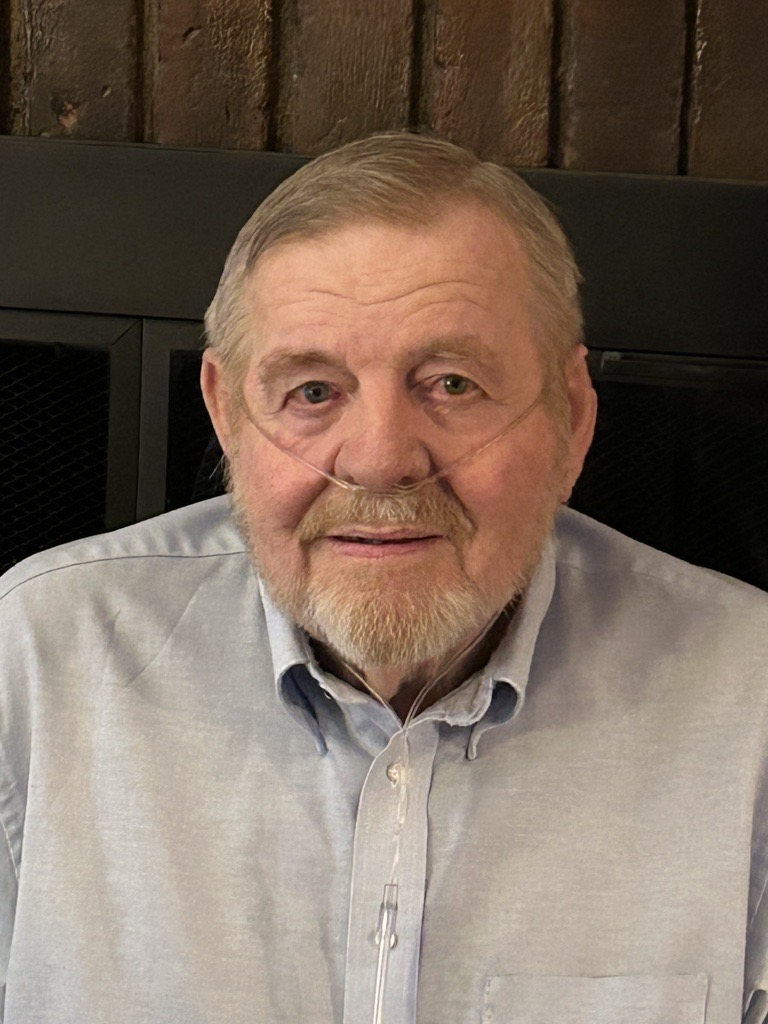


For most of four decades, Lawrence “Larry” Stevens worked as a electric utility lineman, climbing polls and working from hovering helicopters during the construction, inspection and maintenance of power systems throughout Arizona and Washington.
Now retired, Larry and his wife Laura are content living in the sparsely inhabited forests of Overgaard, a small community in the White Mountains of eastern Arizona, between Payson and Show Low.
Larry, 69, originally moved 40 years ago to the White Mountains’ town of Pinetop. But eventually, “Pinetop outgrew me. It got too big, too busy. It’s nothing but a northern extension of Scottsdale on the weekends,” he said. “I don’t like the cities. I don’t like the hustle and bustle.” Since moving to Overgaard, “I tell people I moved 50 miles down the road, and 40 years back in time.”
But in October, 2021, when an unrelated medical condition required a body scan, doctors discovered Larry had an abdominal aortic aneurysm (AAA), a bulge in the body’s main artery that carries oxygenated blood from the heart to the pelvis, legs, intestines and kidneys. An estimated 1 million Americans are at risk of a AAA rupture, a violent event that causes massive internal bleeding. Death occurs in more than 80% of cases, with nearly one-third of patients dying before reaching a hospital.
Subsequent scans showed Larry’s aneurysm was growing, if ever so slowly. For advanced medical monitoring, Larry was referred to HonorHealth Research Institute.
Part of the stAAAble clinical trial
Hasan Aldailami, M.D., HonorHealth’s chief and network director of vascular and endovascular surgery, suggested Larry enroll in a clinical trial of a new type of aortic treatment, the stAAAble clinical trial, testing the Nectero EAST System.
This is a minimally invasive, investigational, single‑use endovascular treatment that delivers pentagalloyl glucose (PGG) directly into the aneurysmal wall. PGG binds to elastin and collagen to potentially strengthen the vessel wall, slow growth, and reduce rupture risk. By significantly slowing the growth of the AAA, many patients might never need to undergo an invasive repair procedure.
For now, Larry’s aneurysm isn’t large enough to require repair or a stent, and by random selection he is not receiving the new treatment. Instead, his participation in the clinical trial is as part of a control group. Originally scanned once a month, Larry now visits the Research Institute once every six months for monitoring. If his AAA grows to the size required for surgical intervention, he is eligible for standard care repair of the aneurysm.
Larry is grateful for the care he receives under Dr. Aldailami, the clinical trial’s Principal Investigator, who also is HonorHealth’s director of aortic surgery, program director of the vascular surgery fellowship, and a professor of surgery at Arizona State University.
Reassured by study’s monitoring
“I’m pretty much sitting back and keeping an eye on it,” said Larry, who is reassured by his participation in the clinical trial, since it means many experts are watching over his condition.
“I’m very comfortable with it. They (Institute staff) have been very informative along the way. I’ve learned a lot about aortic aneurisms that I would not have learned from my (general practice) doctor. I’ve been very happy with it, so far.”
As he gathers around a backyard firepit with friends and family, surrounded by forest critters and a sea of stars, Larry takes comfort in knowing that his clinical trial monitoring shows that, because his AAA is progressing so slowly, he might not ever need an invasive treatment.